
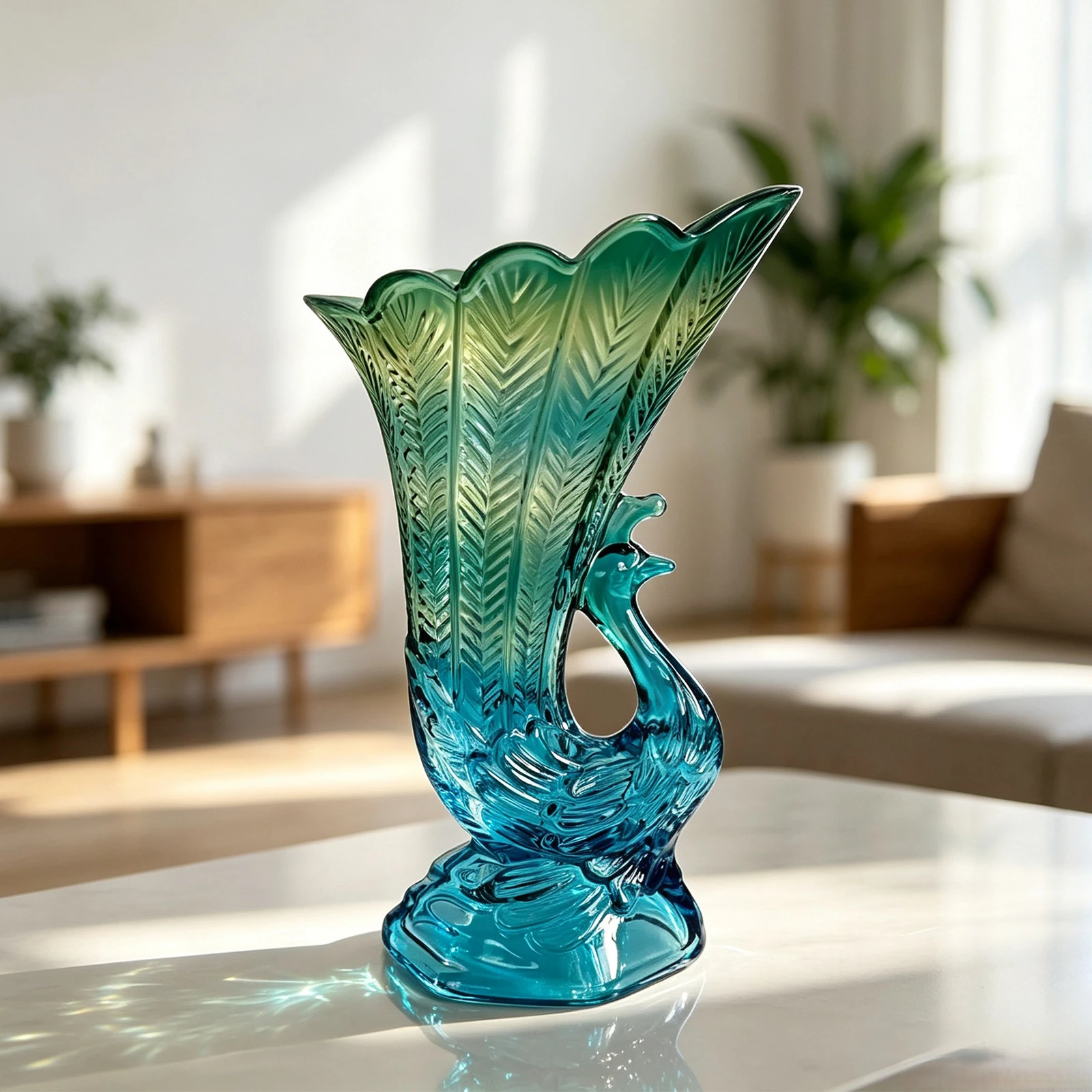
Why do hand-blown glass vases inevitably have batch-to-batch variations?
Is every hand-blown glass vase different? Yes. This variation comes from the craft itself and cannot be completely eliminated; it is also the basis for subsequently agreeing on color difference and dimensional tolerances.
Comparison of process differences between hand-blown and machine-pressed
Machine pressing relies on molds and a fixed stroke; the molten glass is formed in a closed mold, giving high consistency within the same batch, but the shapes are limited by the mold. Hand-blowing, by contrast, involves manual gathering of glass, blowing, rotating, and shaping; the force, rhythm, and amount of glass depend on the operator's judgment, and variables such as glass temperature, blowing speed, and mold temperature all introduce deviations. Therefore, the slight fluctuations in color depth, wall thickness, and height of the same hand-blown glass vase between different batches are the result of the hand-blowing process, not a failure of quality control.
This vase is made from lead-free glass raw materials and hand-blown; its transparency comes from manual control, so consistency can only be agreed within a range and cannot be locked to exact values.
The special impact of the peacock shape on batch consistency
The peacock shape places higher demands on process control. The multi-color transitions, curved surfaces and arcs, and local tightening and loosening of the bottle body all rely on manual shaping in a softened state. Color distribution is especially difficult to reproduce piece by piece, and it is common for the same color code to show variations in depth or transition position between different batches. The shaping arcs and the closing of the rim also cause dimensional fluctuations. The nominal 12×27.5cm is a reference size, and individual pieces may have small deviations.
For buyers and floral studios, single-piece display is about the effect, while bulk purchasing is about the range.
Batch differences are not equal to quality defects. It is recommended to clarify the acceptable degree of color difference and the allowed dimensional deviation during the sampling stage. These two items directly determine whether acceptance inspection goes smoothly and whether old and new batches can be mixed during restocking. For specific color code ranges and dimensional fluctuation intervals, you may provide Star Luck with the intended use scenario, and they will supply matching samples and an agreed-upon plan.
How should color difference and dimensional tolerances be stipulated in the contract? Four-step framework
Batch variations in hand-blown glass vases cannot be eliminated entirely; the purpose of the contract is to put "acceptable" into writing that both parties recognize. It is recommended to follow four steps: establish the baseline, define the range, define the measurement method, and define the handling method.
Color difference stipulation: from color card confirmation to acceptable range
It is recommended that the color difference clause use the sealed sample or color card signed and confirmed by both parties as the baseline, noting the number, confirmation date, and custodian, and stipulate visual comparison under standard light sources. The acceptable range must be filled in after color-by-color negotiation with the Star Luck supplier; multi-color styles should be listed separately by color, avoiding vague wording such as "minor color difference is acceptable." Regarding "whether colors can be made according to our color card," a physical color card or color number must be provided, and the supplier must confirm the degree to which it can be achieved before it is written into the contract.
Under the hand-blown process, the customer's color card is usually used as a directional reference rather than for exact replication;The contract should clearly distinguish the boundary between "selection from existing color ranges" and "customization according to the customer's color card."
Dimensional tolerance agreement: critical dimensions and measurement methods
It is not necessary to set tolerances for all dimensions. With 12×27.5cm as the nominal size, it is recommended to lock down critical dimensions such as the inner diameter of the bottle mouth, the maximum diameter and height of the bottle body, and the bottom contact surface, and negotiate the tolerance ranges separately with the supplier. At the same time, specify the measuring tool (such as calipers), the measurement location (whether the mouth rim is included), and the judgment rules.
All tolerance values must be negotiated and confirmed with the Star Luck supplier team; this article does not provide specific values. It is recommended to attach the sealed sample photos and measurement diagrams as contract annexes to reduce disputes during execution.
How should batch acceptance be carried out?Recommended sampling plan and acceptance criteria
Batch variations in hand-blown glass vases cannot be controlled by a single clause in the contract stating "tolerance ±X mm"; it must be translated into actions at the receiving inspection stage. The goal of acceptance is not to pick out perfect pieces, but to determine whether the entire batch falls within the agreed range, which deviations can be released, and which must be returned or replenished.
Sampling quantity and inspection item list
The sampling ratio should be recommended based on batch size tiers, rather than full inspection or randomly picking a few boxes. An actionable approach is: for each batch, sample about 10% of the boxes, with no fewer than 5 boxes;Randomly take 2–3 pieces from each box, keeping the total sample size per batch between 20 and 30 pieces. If the same order is split into multiple colors, sample separately by color, because color differences in hand-blown glass tend to fluctuate by color family; sampling them mixed together would mask problems with individual colors.
Inspection items are carried out in the order of "dimensions first, then appearance, then function":
- Dimensions: Using 12×27.5cm as the baseline, measure the height and maximum outer diameter of each piece one by one, and record the deviation distribution rather than only noting whether it is out of tolerance.
- Color difference: Compare with the sealed sample under a uniform light source, focusing on whether the color is consistent within the same batch, rather than comparing with an on-screen image.
- Appearance: bubbles, flow lines, rim flatness, and base stability.Hand blowing allows for slight craft marks, but the boundary of "acceptable marks" must be agreed upon in advance.
- Function: stability for flower arrangements, whether water culture leaks, and whether the bottle mouth cuts hands.
Handling of Nonconforming Products and Allocation of Responsibility
It is recommended that the judgment rules adopt two levels: "individual-piece judgment + whole-batch judgment": if a single piece exceeds the agreed tolerance, that piece is judged as nonconforming;when the nonconforming rate of the whole batch exceeds the agreed proportion (for example, 5%), a whole-batch negotiation is triggered, rather than merely sorting piece by piece.
After nonconforming products are found, first distinguish the type and then determine responsibility: systematic oversizing or undersizing usually points to mold or process control, and the supplier should bear rework or replacement;Damage caused by transportation needs to be defined in conjunction with the packaging method and logistics liability;If the color difference falls within the sealed sample range, it is a normal fluctuation of handmade products and should not be treated as non-conforming. The priority order of handling methods is: replacement shipment, deduction from the next batch, full batch return, depending specifically on the non-conforming ratio and delivery pressure.
It should be noted that the above sampling ratios and judgment thresholds need to be determined in conjunction with your order volume, delivery schedule, and end-use scenarios—the tolerance margin for urgent wedding orders and regular stock preparation is completely different. It is recommended to confirm the sealed sample standards, acceptable trace range, and batch non-conformance handling methods with the Star Luck team before placing an order, and write these into the order remarks so that there is a basis for acceptance inspection.
Which scenarios are suitable for accepting handmade batch differences?Which scenarios are recommended to choose a simpler solution?
Hand-blowing means that each vase has natural fluctuations in body thickness, peacock shape curvature, and color depth. At 12×27.5cm and 1283g, a single piece has presence when displayed alone without overwhelming the space, landing exactly in the zone of "visible but not stealing the spotlight"—which also determines which scenarios it suits best.
Recommended scenarios: differences in tolerance for wedding table centerpieces versus home decor
Wedding banquet table centerpieces. Vases are spread across different dining tables, so guests won't compare two side by side. Slight color variations and curvature differences actually appear more lively under the cover of floral materials and banquet lighting.
Multiple color options are an advantage here: colors can be assigned by table number or floral theme, turning batch variations into design layers. If the photo area requires a single row with completely uniform visuals, the controllable range of color differences within the same batch must be confirmed in advance with the Star Luck team.
Home decor and buyer's shop displays. A single piece or a combination of two or three pieces in the living room or entryway—what the viewer perceives is the overall atmosphere rather than industrial consistency;Customers at boutique stores are buying precisely the uniqueness of "this one piece." In such scenarios, batch variation does not increase management costs; instead, it supports a premium narrative.
Not recommended scenarios: bulk orders with extremely high consistency requirements
Chain hotels with uniform guest room configurations, corporate bulk gifts requiring completely identical appearance, or e-commerce detail pages needing "what you see is what you get" standardized product images, where manual batch variation will directly translate into acceptance disputes and after-sales costs. For such needs, machine-made glassware should be given priority, or the acceptable color difference and dimensional tolerance ranges should be explicitly agreed upon with the Star Luck team before placing an order.
Tight budget with a focus on volumethe labor cost of hand-blowing makes it unsuitable as a low-priced traffic-driving item;a simpler approach is to choose regular glass vases with uniform specifications and reserve the budget for floral materials or packaging. When the buyer has no acceptance standards yet,it is recommended to first take small-batch samples, align internal expectations with the physical items, and then decide whether to scale up.
In terms of budget, it is recommended to prioritize sample confirmation and sealed-sample approval;For custom colors and logos, the minimum order quantity threshold must be confirmed first.
Scope of the conclusion: Buyers who can accept handmade variations and are willing to agree on a tolerance framework in the contract are suitable for choosing the Star Luck hand-blown peacock vase;For scenarios pursuing zero differences or with extremely limited budgets, it is recommended to consider machine-pressed products or rental options.
Frequently Asked Questions
Is 12×27.5cm more suitable for wedding table flowers or living room ornaments? Both are valid. As a table flower container, this height will not block the line of sight of guests across the table;As a living room ornament, a single stem arrangement or hydroponic display has sufficient volume.
The difference is that wedding scenarios usually involve bulk purchases, and batch color differences need to be confirmed in advance;Living room scenarios mostly involve single-unit purchases, so differences are basically not a problem.
In which situations is this hand-blown vase not recommended? When you need batch configurations with completely identical appearance, when low-price volume sales are the core requirement, or when internal acceptance standards have not yet been established, it is advisable to first choose a simpler standardized solution, or obtain samples for confirmation first.
Is there a simpler alternative when the budget is limited? If the budget constraint is mainly on the unit price, you can prioritize conventional glass vases with uniform specifications;if the constraint is the labor cost of "difference management," you can reduce the purchase batch size and concentrate usage within the same batch to lower the risk of mixed batches. Which option is more cost-effective depends on the usage volume and acceptance requirements.
How can I determine whether my scenario can accept batch differences? Ask yourself: will these vases be placed side by side and compared at the same time by the same pair of eyes? If it will, tolerances need to be agreed upon;If it won't, the differences are the characteristic.
When unsure, tell the Star Luck team the usage scenario and acceptance expectations, and ask them to provide matching recommendations and sample support based on the scenario.
Learn more
If your next batch of procurement involves wedding table flowers, buyer's shop displays, or hotel soft furnishing configurations, you can send the usage scenario, order batch size, color preferences, and acceptance expectations to the Star Luck team.Based on this, we can provide matching samples, sealed sample support, and tolerance agreement recommendations to help you align the "acceptable range" clearly before placing an order and reduce disputes during receiving.
Related products:Modern Colorful Hand-Blown Glass Vase Peacock Shape Floral Arrangement Simplicity Design for Living Room & Wedding